
The NSW Housing Delivery Authority pathway: what it means for owners of sites with residential potential
The NSW Housing Delivery Authority (HDA) has now been operating for over a year and is having a demonstrable effect on the market and has resulted in many projects being declared State Significant Development (SSD). This has the benefit of opening up an accelerated approval pathway for the projects through the State system. For owners of substantial sites in Greater Sydney and major regional centres, the pathway is commercially relevant and, in many cases, significantly value changing.
This article explains how the HDA pathway works, why it matters now and the strategic questions owners should be asking before deciding whether to act.
Is my property potentially worth more than I think?
For many large sites, the answer is yes. The current state planning environment, combined with the HDA pathway, can enable materially higher residential density than would typically be supported through local council processes. In practical terms, this can mean:
Increased floor space
Increased building height.
Access to a greater degree of planning flexibility that does not usually exist at the local level.
For qualifying sites, this can translate into a significant uplift in development potential and, therefore, land value. Importantly, this uplift has little to do with changes to the physical site itself and more to do with the planning pathway used.
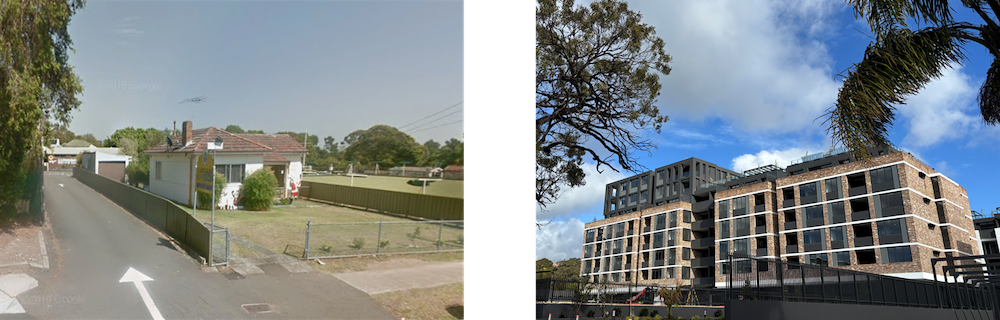
Before and after - example of actual development
Can the State override council refusal or resistance?
In many cases, yes. Where a project is declared SSD through the HDA pathway, assessment responsibility shifts away from the local council to the Department of Planning, Housing and Infrastructure (i.e. State level), with the Minister (or delegate) as the consent authority.
This does not remove community consultation or technical assessment. However, it can materially reduce local council veto risk, particularly for sites that are strategically located but constrained by local planning controls or political resistance.
For owners who have struggled to progress development potential through council, this change alone can be significant.
How much upside is required to justify the effort and cost?
The HDA pathway is not designed for marginal outcomes. In practice, it tends to suit sites where the potential uplift is meaningful relative to current use value. Across Sydney and key regional centres, the pathway has already affected development potential and site values for many qualifying properties.
The endorsement process itself is relatively short and modest in cost when compared to overall site value. If endorsement is achieved, the not insignificant cost of preparing and running the development application is borne by a development partner rather than the landowner.
For owners with a site that clearly meets the scale and location criteria, the risk/reward profile is often asymmetric, where limited upfront exposure has potential for substantial value creation.
What are the risks?
There are risks, but they are generally manageable. Not every site will receive HDA endorsement and the process is not guaranteed. Planning merit, location, delivery capability and alignment with state housing objectives all matter.
However, the early stage of the pathway allows owners to test the opportunity for a relatively modest cost in a short timeframe before committing to a full development application. Where endorsement is not achieved, the owner is typically no worse off than before, having gained clearer insight into the site’s realistic development potential.
Could my property qualify for HDA endorsement?
If your property has one or more of the following features the HDA pathway is worth investigating.
If you control a medium to large landholding capable of delivering a meaningful number of dwellings your property may be of interest.
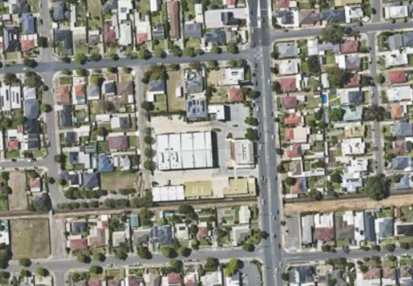
If your site is in metropolitan Sydney or a major centre, particularly close to a train station, town centre or established higher density area, it may align with current housing priorities.
If the property is within comfortable walking distance of rail or major public transport, it is more likely to support increased residential density.
If the land appears under-developed relative to its location and could reasonably accommodate materially greater density than current controls allow, it may warrant assessment.
If redevelopment of your site would contribute to infill housing and more efficient urban land use, it is consistent with stated State objectives.
If the land is in single ownership, or can be coordinated across adjoining owners, it is structurally suited to lodging a coherent proposal.
When is the smartest time to go to market?
There is no single correct answer. Different strategies suit different owners, their properties and the relevant market. Some choose to go to market early, using the HDA opportunity to attract a well funded development partner who can manage and fund the planning process. Others prefer to progress the though the initial HDA pathway first, crystallising planning upside before engaging the market.
At that point, or earlier, a development partner can be introduced. In practice, bringing a partner in earlier is often preferable, given the timelines and delivery expectations embedded in the HDA pathway.
Others wait until approvals are in place and sell with maximum certainty. Each approach can be rational if it aligns with the owner’s objectives, risk tolerance and capital position.
Am I better off partnering or selling outright?
This is a strategic decision rather than a technical one. An outright sale provides certainty and simplicity but typically with less uplift than through a well structured development partnership. Partnering can allow owners to receive a fixed total return including uplift or retain exposure to further value uplift, but it requires greater involvement and comfort with development risk.
Many commercially capable owners prefer partnering where the uplift is substantial and the right counterparty can be secured. Others prefer a clean exit once value has been sufficiently established.
The right answer depends on scale, demand for development sites, demand for the end product of the project, capital capacity and personal priorities.
What happens if I do nothing?
Nothing happens, and that is the point. There is no cost and no immediate risk in standing still. However, there is also no value creation. As state housing programs take effect and more sites move through accelerated pathways, there is a reasonable prospect that increased supply will, over time, place downward pressure on development site values.
For some owners, inaction is a conscious decision. For others, it is simply a default position that has not been tested against the current market and policy settings.
Should I act alone or consolidate with neighbours?
Larger, efficient sites may proceed alone. Smaller or irregular sites can benefit from consolidation, improving design efficiency, floor space yield and market appeal. Consolidation is not always necessary, but it can be a strategic option worth early consideration, particularly where scale is marginal.
Independent, owner focused advice can be valuable in exploring this option discreetly and realistically, without forcing outcomes and confirmation bias.
Who is the HDA pathway really designed for, developers or owners?
Developers are active users of the HDA pathway, but the pathway itself is not for developers only. Property owners can achieve equivalent outcomes by engaging experienced, owner focused advisors who understand how to position a site, assess planning merit and structure engagement with the market on the owner’s terms.
The key distinction is not who uses the pathway but who controls the strategy.
A final thought
For owners of medium and large residential sites with residential potential, the HDA pathway represents a genuine opportunity to reassess value, timing and strategy under today’s planning settings.
Not every site will qualify and not every owner should proceed. But for those with the right scale and location, it is often worth understanding the opportunity before engaging with developers, committing to a sale process or deciding to do nothing.
For owners who suspect their site may qualify, a short, confidential call or Teams meeting can help establish whether the HDA pathway is likely to be relevant to their property, the likely scale of any value uplift and which strategic options are worth considering, or consciously setting aside.