
Collectively selling with your neighbours: How value is shaped by early strategy
The issue
Many Sydney landowners are being told by agents, neighbours and the media that “the real money is in amalgamating.” Sometimes that is true. Sometimes it isn’t. The difference usually comes down to whether the combined site genuinely improves the product a developer can deliver on it, how efficient new apartments are on the site and whether the owners approach the process in a coordinated, commercially disciplined way.
Selling to a developer is fundamentally different from selling a standard residential property. A typical home buyer compares the sales of similar properties to assess what the property may be worth and how much they are prepared to pay. A developer starts with an intended end product, models revenue and costs, and works backwards to determine what they can pay for the land. Comparable sales matter but they are usually a secondary reference point to confirm the financial feasibility results.
This is why value can be won or lost before any formal offer is made. If owners engage too early, before they understand the combined site from the developer’s perspective, developers often control the agenda, the pricing and the terms.
Context: why amalgamation is on more owners’ radar in 2026
The planning environment in greater Sydney is encouraging more housing supply in established areas, particularly through policies and establishment of precincts that support increased density around centres and transport. In practical terms, that means more owners have property that may be capable of supporting a more intensive development outcome, especially if sites are combined.
But “capable” is not the same as “certain.” Planning controls vary by location and outcomes depend on many interacting factors: height and floor space limits (where they apply) setbacks, parking, design standards, access, easements, flooding, heritage, trees, site slope, and the discretionary judgement that sits inside most approval processes. Amalgamation can improve the odds and the efficiency of a scheme but it does not convert a difficult site into an easy one by itself.
The practical point for owners is this: you do not need to commit to a sale to test whether amalgamation is worth pursuing. You can do preliminary work to understand whether combining improves the site’s feasibilityand market appeal before you expose yourself to the pressure of a live negotiation.
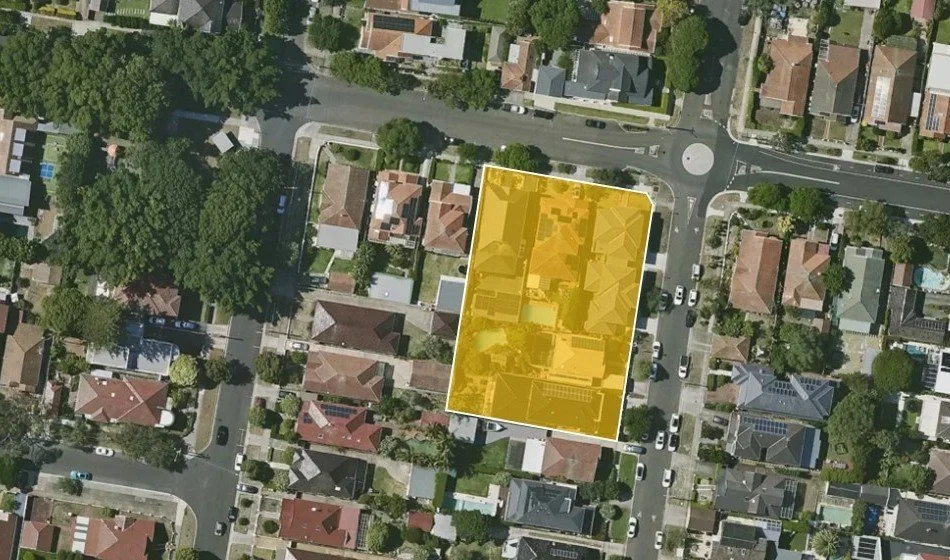
Analysis: why combined sites can change developer interest and pricing
A combined site can increase development potential in several ways that matter to developers:
Size can unlock options, but only if it improves the scheme.
A larger footprint may allow more yield, better building separation, more efficient parking, improved servicing or a design that better meets the controls. It can also support product types that are not viable on smaller lots.
However, “bigger” is not automatically “better.” Site efficiency matters. Two awkward lots can create a bigger awkward lot. A combined site that still has poor access, conflicting easements, a site shape that limits efficient building design or disjointed street frontages may not produce a materially better outcome. Developers will price what the site can deliver, not its total square metres.
Better configuration can reduce planning and delivery risk.
Developers price risk. If a combined site allows a scheme that is more likely to receive consent, or reduces design compromises that trigger objections, that can improve the risk profile. Likewise, improved access, staging, basement design, and construction logistics can reduce construction risk and cost uncertainty.
The buyer pool usually expands.
Larger, better-configured sites tend to attract more developers and more serious interest than small or fragmented sites. More credible bidders generally means better commercial tension. That tension can influence not only the headline price, but also the terms, deposit, due diligence period, conditions, ability to assign, timing flexibility, and how planning risk is allocated.
Developers prefer coordinated counterparties.
Most developers will strongly prefer dealing with a single, aligned group rather than multiple individual negotiations. Separate negotiations create the risk of an individual owner holding out, inconsistent terms and wasted bid costs. If owners are coordinated and credible, developers can justify spending time and money investigating and bidding. If owners are fragmented, developers often walk away early.
Implications: where owners commonly lose leverage
Owners usually get disadvantaged in three situations.
Firstly, engaging with a developer before understanding feasibility.
Many owners start with the question “what would you pay?” when the better first question is “what development could this combined site reasonably support, and what risks and costs does that imply?” This is fundamental, without that baseline owners cannot test whether an offer is commercially credible. They also cannot confidently negotiate terms because they do not know which terms matter most in the developer’s model.
Secondly, negotiating as individuals when the value is in the combination.
If the combined site is the real opportunity, individual negotiations can allow the developer to pick off owners at different prices and terms. That approach can be rational from a developer’s perspective, it reduces competition and can reduce the land cost, but it can leave owners with an outcome that is weaker than what a coordinated sale process might have produced.
Thirdly, understanding what is behind an unsolicited developer approach
A direct approach from a developer can be a useful signal that your area has development potential. But it is also usually an attempt to secure the site directly, with minimal competitive tension, and on terms that suit the buyer. That does not imply misconduct. It is simply normal commercial behaviour in a market where the buyer often has more information than the seller.
Where owners tend to achieve their best result is when credible developers compete, using a clear process and a clear information set, with the owners aligned on strategy and minimum acceptable terms.
Practical insight: how to go about a joint sale process without losing control
Below is a practical, owner centred approach to a joint sale to a developer. Note that the sequence matters.
1) Start with alignment, not price
Before anyone talks to the market, neighbours should establish whether they can act as a coordinated group. That does not require identical motivations, but it does require clarity on a few points:
Are we genuinely open to a collective sale, or are we simply exploring the idea?
Are we broadly aligned on timing, or do owners have different sale horizons?
Are there any core issues that are not open to negotiation?
How will we make decisions and handle disagreement?
Early alignment is often the difference between a process that attracts strong bidders and one that collapses when it matters.
2) Do enough work to understand the site from a developer’s perspective
Owners do not need a full development application or expensive documentation to get clarity. But they do need a grounded view of:
likely development form and constraints (what the controls and site conditions suggest)
key risks such as access, flooding, heritage, easements or design constraints.
site efficiency (how much usable area can realistically be delivered, not just land size)
an understanding, based on development feasibility, of what a typical developer could pay in principle, given reasonable assumptions
This isn’t a formal valuation and it does not predict an approval outcome. It is a check of the commercial reality that lets owners engage with developers from an informed position. A further benefit is that it gives the owner group a shared framework and common language, improving communication between neighbours about what issues genuinely matter and which do not.
3) Put a simple governance structure in place
For most neighbour groups, the practical approach is:
nominate a small steering group (2–4 people)
agree one communication channel and a record keeping method
appoint one point of contact for external parties
agree how professional advice costs are approved and shared
agree decision rules such as unanimous vs majority and which decisions require what threshold.
Developers do assess whether the group can execute, it is a key risk judgement for them. Clear governance makes the group credible.
4) Decide how you will go to market
There are a few common ways owners typically take a combined site to the market:
Open market sale managed by an agent
This can work where the agent has a specialised skill set in development site transactions and is capable of negotiating with developers on the commercial variables that matter to them, including those that sit within feasibility analysis rather than standard residential price comparisons.
Targeted direct approaches to selected development companies
A structured program of approaching a short list of the most relevant developers, based on a clear understanding of which buyers are best suited to the site and most likely to see value in it.
Controlled competitive off market process (often preferred where owners do not want the opportunity promoted publicly and wish to avoid the associated exposure and expense)
Inviting all relevant development companies for the site to assess the opportunity and submit proposals on defined terms and within a set timeframe. This approach recognises that the pool of credible development company buyers for any given site is limited and knowable, allowing owners to create competition without public promotion or a broad marketing campaign.
The objective is not broad exposure for its own sake. It is to create credible competition between capable developers, on terms the owners understand and have chosen deliberately.
5) Pay as much attention to terms as to price
In developer transactions, the price is usually inseparable from the terms. Owners should expect proposals to include conditions such as:
due diligence periods
conditions such as finance, due diligence/satisfactory investigations and planning outcomes.
Requests for long settlement periods
sometimes access rights before settlement
ability for the buyer to nominate or assign, or by using a special purpose vehicle (SPV).
Conditionality is not automatically bad. It can be appropriate where risks are real and require management. The point is to understand which conditions are reasonable, which are unnecessary, and which transfer too much risk to owners. Competition helps here because bidders can sharpen both price and terms when they know others are in the frame.
6) Keep optionality until you have enough information
A well run process allows owners to test the market without locking themselves into a sale prematurely. Heads of agreement, exclusivity, and access arrangements should be handled carefully, because they can limit owners’ leverage long before final contracts are negotiated.
Independent, owneraligned advice can be useful at this stage, not to “sell the site,” but to ensure owners understand the commercial dynamics, the decision points, and the risks embedded in proposed terms.
FAQs
Who do you act for, owners or developers?
We exclusively advise and act for landowners, ensuring our specialisation and expertise directly serve their interests without any conflict.
Does this advice reflect real development negotiations, or just theory?
The guidance in this article comes from advising on live development site transactions on behalf of landowners, including direct negotiations with development companies on price, conditions, risk allocation, and commercial structure. This experience also extends to negotiating development partnerships and joint venture arrangements where owners retain an ongoing interest, and to overseeing those projects through to completion on the landowners’ behalf.
That perspective is grounded in the practical cut and thrust of real negotiations and development activity carried out on behalf of landowners, rather than detached or purely academic advice.
Why do you offer free initial consultations?
It allows you to determine if our services align with your needs.
An early conversation helps us assess if we can effectively assist you. If not, it is best for both parties to realise this promptly.
Our reputation benefits when we offer helpful guidance, even if we cannot take on your project.