
How to sell with your neighbours to a developer: what owners need to understand before starting
Many Sydney property owners are now asking a similar question: would my property be worth more if I sold together with my neighbours to a developer?
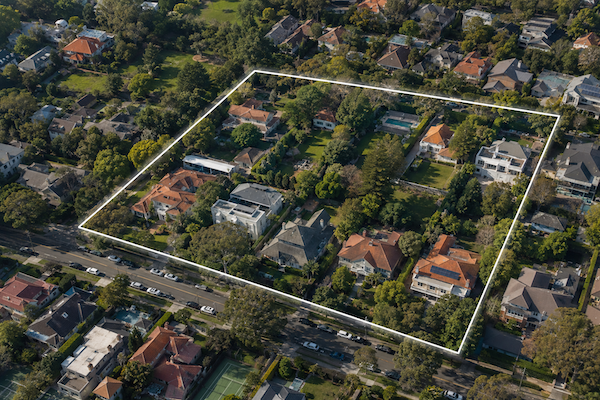
In some cases, the answer may be yes. A group of adjoining properties can sometimes create a development site that is more valuable than the individual homes sold separately. But that result is not automatic. The value created by an amalgamated site depends on what the combined land allows a developer to do, how efficiently a development can be designed, what risks remain, how developers compete for the site and how well the owners organise themselves before going to market.
The objective is therefore not simply to “sell to a developer”. The better objective is to maximise the value created by the combined site, create genuine competition between capable developers, and ensure the sale proceeds are divided fairly between the participating owners.
Why owner action matters
A 2025 study by researchers from Macquarie University and UNSW found that the impacts of upzoning and collective sales are highly variable and influenced not only by planning settings and market conditions, but also by the actions taken by residents themselves. The research highlights that owner behaviour can play an important role in shaping outcomes, rather than owners simply being passive beneficiaries of planning changes.
For owners considering a joint sale, the practical implication is important. Rezoning and amalgamation can create significant value, but the amount ultimately captured by owners is often influenced by more than the planning change itself. How owners organise themselves, coordinate with neighbours, understand the development opportunity and approach the market can materially influence the outcome achieved.
Research reference: Liu, S., Ruming, K., Gillon, C., Pinnegar, S., Crommelin, L. & Easthope, H. (2025), “‘It’s Like Winning the Lottery But Without Buying a Lottery Ticket’: Housing Market Impacts of Compact City Planning, Upzoning, and Collective Sales”, Urban Policy and Research, 43(1), 33–51. DOI: 10.1080/08111146.2025.2463896.
The planning context in Sydney
The issue has become more relevant because the planning environment in NSW is encouraging more housing in established areas, particularly near centres, transport and services. The NSW Low and Mid-Rise Housing Policy is directed at enabling more housing types, including dual occupancies, terraces, townhouses and residential flat buildings, in certain locations around town centres and stations.
The planning environment in NSW is continuing to encourage additional housing supply in established urban areas, particularly around centres and transport. The NSW Government views the Housing Delivery Authority as a crucial cornerstone of its housing agenda and has established it as a permanent planning pathway to accelerate residential development, citing its role in creating a pipeline of more than 150,000 potential homes and accelerating housing delivery.
For owners, these policy settings may increase interest from developers in some locations. But planning opportunity is not the same as development certainty. Controls, site constraints, design requirements, access, parking, trees, heritage, flooding, infrastructure, market conditions and approval risk can all affect whether the apparent opportunity becomes real development value.
How developers think about value
Selling to a developer is different from selling an ordinary residential property.
A home buyer usually looks at comparable sales and asks what they are prepared to pay for the home. A developer starts with the likely end product, estimates revenue, costs, finance, risk and required profit, and works backwards to determine what the land is worth to them. Comparable sales may still matter, but they are usually a check against the feasibility rather than the primary driver of price.
This means owners can easily misread the commercial position. Renovations, presentation, emotional value and the quality of the existing house may be very important in a normal residential sale. They may matter much less to a developer if the site is being acquired for redevelopment.
By contrast, factors such as land area, frontage, depth, corner position, access, site shape, slope, easements, developable yield, planning risk and whether the property is essential to the development scheme may be far more important.
This is one reason owners often disagree about how proceeds should be divided. One owner may have a larger house. Another may have a larger land area. Another property may provide critical access or frontage. Another may be needed to make the site work at all. These factors need to be understood commercially, not emotionally.
Bigger is not always better
A common assumption is that adding more properties will always increase value. Sometimes it will. But not always.
A larger site could mean more new floor space yield, improve building separation, allow better parking, support a more efficient design or attract a wider pool of developers. It may also reduce planning or delivery risk if it produces a better shaped and more practical development site.
However, a larger site can also add complexity. More owners means more decision-makers, more negotiation, more chance of disagreement and potentially more properties sharing the same development premium. A property should not be added to an amalgamation merely because it is next door. The question is whether it improves the development outcome sufficiently to justify its inclusion.
For an individual owner, the practical question is not only whether the combined site is worth more. It is whether their own property contributes to that additional value and whether the proposed allocation reflects that contribution fairly.
Why the allocation of proceeds matters
Once owners believe the combined site may be worth more, attention usually shifts to a more sensitive question: how should the sale proceeds be divided?
This is often where a joint sale becomes difficult. Owners may ask:
My land is larger, so should I receive more?
My house is better renovated, so should that count?
My property is at the corner or provides access, so is it more important?
If the developer needs every property, should we all receive the same amount?
How do we divide the development premium fairly?
There is no single allocation method that is right in every case. A fair outcome may need to consider existing residential value, land area, development contribution, strategic importance, risk, holdout leverage and the practical need to keep the group aligned.
What matters is that the allocation method is considered before owners are under pressure from a developer offer. If the group waits until a large offer is on the table, disagreements about fairness can quickly undermine the process.
Where owners commonly lose leverage
Owners commonly lose leverage in three situations.
The first is engaging with developers before understanding the site from a development perspective. Asking “what will you pay?” can be the wrong starting point. The better question is: what development could this combined site reasonably support, what risks and costs would a developer price, and what does that suggest about what the land may be worth to a developer?
The second is negotiating individually when the value lies in the combination. If a developer can deal with owners separately, it nearly always reduces competitive tension and can create inconsistent prices and terms. That may be rational from the developer’s perspective, but it can leave owners with a weaker collective outcome.
The third is accepting an unsolicited approach without understanding why it has been made. A developer approach can be a useful signal that the land has development potential. But it is also usually an attempt to secure the opportunity directly, with limited competition and on terms preferred by the buyer. That is normal commercial behaviour. It does not mean the offer is necessarily unfair, but it does mean owners should understand the opportunity before responding.
A practical process for owners
A sensible joint sale process usually starts with alignment, not price.
The owners should first decide whether they are genuinely open to exploring a collective sale, whether their timing is broadly aligned, what issues are non-negotiable, how decisions will be made and how disagreement will be handled. Early alignment is critical, as many developers will not seriously pursue a site unless they believe the owners are sufficiently aligned and capable of completing a transaction. A developer will assess not only the site, but also whether the owner group can actually execute a transaction.
The next step is to understand the site from a developer’s perspective. Owners do not need a full development application before testing the market, but they should have a grounded view of likely development form, constraints, site efficiency, risks and the broad feasibility logic that informs what developers may be able to pay. This is not a formal valuation and it does not predict approval. It is a commercial assessment designed to help owners negotiate from an informed position of strength.
The owners should then put a simple governance structure in place. For many groups, that means a small steering group, one communication channel, a record keeping process, agreed decision rules, and a clear approach to approving and sharing professional advice costs.
Only then should the group decide how to approach the market.
Choosing the right market process
There are several ways to take an amalgamated site to market.
An open market campaign may be appropriate where public exposure is acceptable, the combined site is relatively straight forward and the agent has genuine capability in development site transactions.
A targeted direct approach may be appropriate where the likely buyer pool is identifiable and the owners want to approach selected developers who are best suited to the site.
A controlled competitive off market process is often effective because target market develops is now and developers value off market opportunities. The objective is not exposure for its own sake. The objective is to create informed competition between capable buyers, on terms the owners understand and have chosen deliberately.
A structured process will produce better information than informal discussions. It allows owners to compare not only price, but also structure, timing, conditions, deposit, settlement, planning risk and the credibility of each bidder.
Price is only part of the outcome
Owners naturally focus on price. That is understandable. But in developer transactions, price and terms are usually inseparable.
A higher headline price may be less attractive if it is conditional, delayed, subject to planning risk, supported by a small or refundable deposit, or tied to an option structure that limits the owner’s ability to pursue other opportunities.
Important commercial issues include:
timing of receipt of sale proceeds;
size and timing of any deposit;
whether the deposit is refundable or non-refundable;
conditions attached to settlement;
whether the transaction is a sale or option;
whether the buyer can nominate or assign;
occupation rights before settlement;
planning approval risk;
the balance between price, timing and certainty.
Conditionality is not automatically bad. Some conditions may be commercially reasonable where real risks exist. The point is to understand which conditions are justified, which transfer too much risk to owners, and how different terms affect what the developer is able or willing to pay.

The decision owners need to make
The real decision is not simply whether to sell with neighbours. It is whether and how to participate in a joint sale in a way that maximises value, manages risk and produces a fair outcome for each owner.
That requires owners to understand three things.
Firstly, whether the combined site genuinely creates additional development value.
Secondly, how to extract the highest achievable price from developers through a credible and competitive process.
Thirdly, how to divide that value fairly between participating owners, having regard to the contribution each property makes to the development opportunity.
Owners who approach the issue in that order are usually better placed than owners who begin with a developer offer, a neighbour dispute or a debate about who deserves what share.
The value created by an amalgamated development site can be substantial, but the uplift is not automatic. Achieving the best outcome requires specialist knowledge of how developers make money from development sites, how they price risk and opportunity, and how transaction structure affects what owners ultimately receive.
For private owners, the practical lesson is clear, before committing to a developer, an agent or an allocation formula with neighbours, understand the development opportunity and its potential, organise the owner group, decide how value should be assessed, and approach the market in a way that preserves leverage.