
Vaucluse strata buildings: repair again or consider sale for redevelopment?
The issue many owners in older strata buildings face
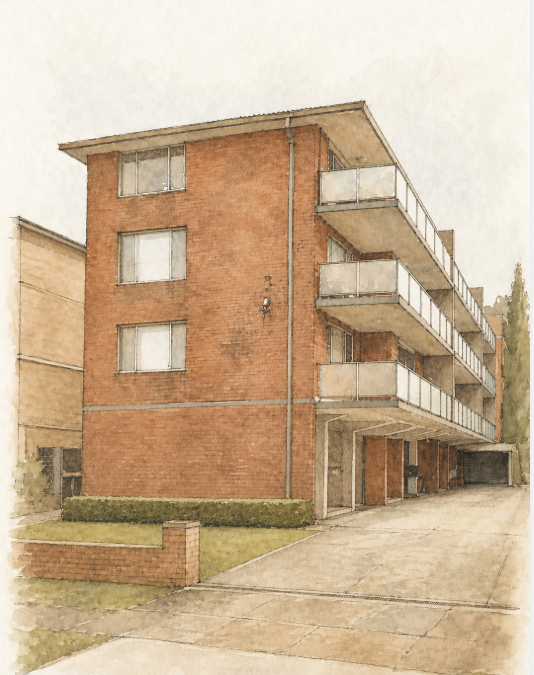
Across Vaucluse, owners in older strata apartment buildings are confronting the same problem. Buildings that have served owners well for decades are reaching an age where repair and maintenance costs are rising sharply. Concrete deterioration, ageing services, waterproofing failures and upgrade requirements for safety and compliance are becoming harder and more expensive to manage.
Special levies for major works can be significant. For individual owners, this often creates frustration and uncertainty. Some owners are happy to fund repairs to preserve their apartment. Others question whether continuing to invest in an ageing building makes sense, particularly in a high value suburb where land itself may now be worth more than the building sitting on it.
This tension often triggers a larger question. Is repairing the building the only option, or could redevelopment provide a way to both end future repair liabilities and realise greater value overall?

Context: why Vaucluse is different
Vaucluse is a tightly held, high value harbourside suburb with characteristics that matter to development value. Many older apartment buildings are boutique in scale, walk up in nature and positioned to take advantage of views, elevation, sunlight and proximity to the harbour. These same characteristics are often highly valued by developers, even when the existing building itself is no longer efficient or economical to maintain.
From a market perspective, properties in Vaucluse with redevelopment potential do not behave like standard residential assets. Developers are not focused on the condition or appeal of the existing apartments. They assess the site as land, testing what can realistically be built under current planning controls, how the site performs in terms of shape, access and topography and how risk and cost affect feasibility.
This means something that may feel like a financial burden to existing owners, such as an ageing building requiring major works, can at the same time represent an opportunity if the underlying land supports a higher and better use in development terms.
Analysis: when repair costs and redevelopment value intersect
There is often a tipping point for owner corporations. Initially, maintenance costs are manageable and spread over time. Eventually, the scale and frequency of required works increase. Funding large repairs through repeated special levies can become divisive, particularly where owners have different time horizons or financial capacity.
At the same time, planning controls in parts of Sydney have evolved over recent years. In some cases, sites that once supported only modest density may now accommodate more efficient or higher value new buildings. Where this occurs, the total value of the site sold as a single redevelopment opportunity can significantly exceed the combined value of the individual units sold separately.
That does not mean redevelopment will always stack up. Some sites are constrained by planning controls, heritage issues, access limitations or topography in ways that materially affect value. Others may look promising on the surface but perform poorly once design standards, view corridors, overshadowing or buildability are properly tested.
The key point is that assumptions are risky in this part of the market. Statements such as “developers are active in the area” or “the zoning allows apartments” are not enough to determine whether redevelopment makes sense. What matters is realistic development potential and how the development market would actually price the site, not what owners hope or fear might be possible.
Implications for strata corporations and individual owners
Recognising that an older strata building may be worth more as a redevelopment site changes the decision making framework.
Firstly, information asymmetry matters. Developers operate in this market every day. Most strata owners, even commercially experienced ones, do not. Without independent, owner aligned advice, there is a real risk that value is left on the table or that owners accept terms that favour the developer buyer rather than the collective.
Secondly, timing and sequencing matter. Repair decisions, levy commitments and early discussions with developers can all narrow future options. Once large capital works are underway, the attractiveness of redevelopment to the market can diminish. Similarly, early engagement with a single developer can undermine competitive tension before the site has been properly understood.
Thirdly, independence matters. Advice that is aligned solely with owners and not linked to selling, broking or buying outcomes, has its greatest value before any path is chosen. This type of advice does not presume redevelopment is the answer. It tests whether it is and compares it objectively against the option of repairing and retaining the building.
What early investigation actually looks like
Importantly, investigating redevelopment does not mean committing to a sale. Early investigation is about answering a defined set of questions, such as:
Could the site, in principle, be attractive to developers given its position, planning controls and physical attributes?
If so, how would developers broadly assess feasibility and risk?
How would a collective redevelopment approach differ financially from individual apartment sales?
What sale or negotiation pathways are available and what are the risks attached to each?
This analysis is commercial and strategic in nature. It is not legal advice, tax advice or a valuation opinion. It does not assume approvals will be granted or that any uplift is guaranteed. Its purpose is to replace assumption with understanding, so owners can make informed decisions rather than reactive ones.
When Owners Have Different Views – Start with Investigation, Not Commitment
One of the most common concerns in strata redevelopment discussions is how to get neighbours to agree. In older buildings, owners often hold very different perspectives. Some are owner occupiers focused on lifestyle and amenity. Others are investors concerned about cash flow and longer term outcomes. Some welcome change. Others initially resist it until they understand what is actually being proposed.
Our experience is that support often increases once owners receive good quality, independent advice. This includes owners who initially appear firmly opposed. Early objections are frequently driven by uncertainty or personal concerns rather than a clear understanding of the financial implications. As those implications become clearer and as owners see that risks can be identified and managed, many reassess their position and shift towards being open and sometimes supportive.
Support also tends to strengthen once three points are understood. First, that the initial stage is about investigation only, not commitment. Second, that the process can be structured to protect owners’ interests and avoid premature decisions. Third, that a collective approach may place owners in a materially different financial position compared to continuing to fund major repairs or selling individually, depending on what the investigation reveals.
Clear communication and careful process matter. A staged approach allows information to be shared and concerns addressed before any formal decision is required. If, after investigation, redevelopment does not justify itself in financial, risk or fairness terms, owners retain the option to proceed with repairs knowing the alternative has been properly tested.
Practical insight: clarity before commitment
For strata owners and corporations in Vaucluse facing expensive repairs, the choice is not between doing nothing and selling to a developer. The real choice is whether to continue investing in an ageing building without understanding its redevelopment potential, or to pause long enough to assess and understand all realistic options.
The most common mistake is acting too early on assumption, whether that is committing to major capital works or engaging with a buyer before the site is properly understood in development terms.
Early clarity keeps options open. It helps owners understand whether redevelopment could reduce or eliminate future repair liabilities, whether it could produce a price premium for their unit, how such an opportunity could be explored safely and how differing owner views can be managed through process rather than pressure.
In a high value suburb like Vaucluse, where site attributes such as views, elevation and position can materially affect development value, this clarity is not an academic exercise. It is a form of commercial risk management and in some cases, an opportunity to convert a growing liability into a positive financial outcome.