
What Could the Mosman Masterplan Mean for Property Owners?
On 26 August 2026, Mosman Council unanimously endorsed the draft Mosman Masterplan and Affordable Housing Contributions Scheme. The proposals have now been lodged with the NSW Department of Planning, Housing and Infrastructure for Gateway Determination. The endorsed Masterplan is intended to accommodate approximately 4,700 additional homes while concentrating higher density development primarily along the Military Road and Spit Road corridors. The proposed controls are not yet final or legally operative.
For many property owners, the announcement immediately raises obvious questions. Is my property affected? Will it become worth more? Should I sell now or wait? Should I speak to neighbours? What happens if a developer approaches me?
These are sensible questions. However, they are not the most important questions.
Before owners decide whether to sell, hold, cooperate with neighbours or engage with developers, they first need to understand the development potential of their property and what that development potential may actually be worth to a developer. In practice, this is where many owners make costly mistakes.
Why Property Owners Are Suddenly Paying Attention
The Masterplan has been prepared against a backdrop of increasing pressure on councils throughout Sydney to accommodate additional housing supply. The NSW Government's Low and Mid-Rise Housing Policy and broader housing reforms have encouraged councils to identify opportunities for additional housing in established urban areas. The Housing Delivery Authority has also become a central component of the State Government's housing agenda, which seeks to accelerate housing delivery across NSW.
The preferred Mosman Masterplan option responds to this policy environment by concentrating growth within selected locations while seeking to preserve the character of much of the municipality. Significant additional development has been proposed along Military Road and Spit Road, with larger redevelopment opportunities identified around key locations including Spit Junction.
For owners of properties identified for additional development potential, the prospect of increased development potential naturally creates interest. The possibility of a substantial uplift in value can be significant. However, the existence of a planning proposal does not automatically answer the more difficult questions surrounding value, timing and strategy.
The detailed proposal also introduces matters that may materially affect development value, including affordable housing contributions generally ranging from 2% to 10% within the Masterplan area, design review for development exceeding four storeys and, on mapped residential land, a proposed minimum 30 metre street frontage for residential flat buildings exceeding four storeys.
The First Mistake Many Owners Make
It is common for property owners to approach a potential development site sale in much the same way they would sell a family home. That approach can be problematic.
When selling a home, owners typically focus on comparable sales, presentation, marketing and negotiation. Development sites are assessed very differently.
Many owners begin engaging with developers, real estate agents or neighbours before they understand the development potential of their property, how developers will assess it, or what it may ultimately be worth in a development context. This can significantly weaken their negotiating position before meaningful negotiations have even begun.
The challenge is that development site value is not driven by the existing building. It is driven by the development outcome that may be achieved on the land.
A well renovated house may command a premium in the residential market. From a developer's perspective, however, that renovation probably has no value because the building will ultimately be removed. Conversely, a property with an ordinary dwelling may be highly valuable if its land contributes significantly to a larger development opportunity.
How Developers Actually Assess Properties
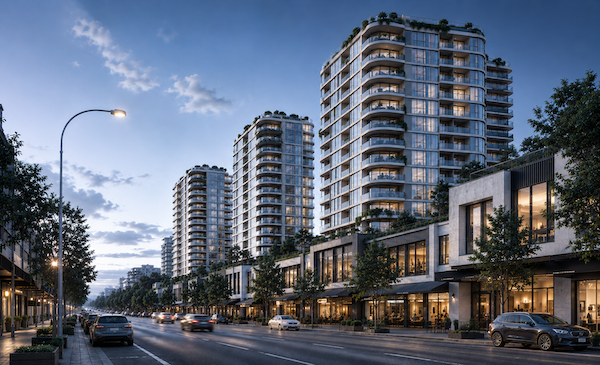
Developers do not start by asking what similar houses have sold for. They start by asking a different question, such as what can be built on this site, what will it cost to deliver, what risks are involved and what profit can be generated?
The answers to those questions largely determine what a developer is willing to pay.
This is one reason why building heights shown on a masterplan should be interpreted carefully. A height limit may provide a useful indication of the scale of development being contemplated, but it does not automatically determine development value.
What often matters most is the amount of saleable floor space that can realistically be achieved after allowing for setbacks, access requirements, site shape, parking, design controls, affordable housing requirements, infrastructure constraints and other planning considerations.
As a result, two properties with the same height limit may have very different development values.
Owners who understand these factors are better placed to understand what developers may actually pay and why.
Why Development Value Is Different From House Value
This distinction becomes particularly important following rezonings or masterplan announcements.
Many owners naturally focus on questions such as how much more their property could be worth, whether the rezoning is certain, what developers will pay and whether they are better off waiting.
These questions are reasonable, but the answers depend on more than the planning proposal itself.
Development value is influenced by factors including site area, frontage, configuration, access arrangements, ability to accommodate development efficiently, planning risk, neighbouring ownership patterns, timing, competition between developers and the structure of any eventual transaction.
Consequently, planning change can create value, but the amount ultimately captured by owners is often influenced by timing, neighbour coordination, market strategy and how developers are engaged.
Is Your Property More Valuable On Its Own Or With Neighbours?
For some owners, particularly along Military Road and Spit Road, their property may be capable of supporting a meaningful redevelopment opportunity independently. For others, the greatest opportunity may arise through cooperation with adjoining owners.
This is one of the most important questions owners within the proposed growth areas may need to evaluate.
A larger assembled site can sometimes accommodate a significantly better development outcome than a single property. The combined site may support more efficient design, improved access, better servicing arrangements and a wider range of development possibilities.
However, amalgamation is not automatically beneficial. Additional properties should not simply be included because they are nearby. The relevant question is whether they improve the development outcome sufficiently to create additional value.
Where neighbouring cooperation becomes necessary, owners should recognise that developers are often reluctant to invest significant time and resources assessing sites unless they believe the owners are sufficiently aligned to complete a transaction. Alignment can therefore influence not only the success of a future sale but whether developers engage with the opportunity at all.
The endorsed proposal makes this issue more important. The proposed 30 metre minimum frontage on mapped residential land and minimum site area requirements for some key sites may mean that a property identified for substantial uplift cannot realise its full potential without adjoining properties. These controls do not require amalgamation in every case but they make site configuration and neighbour alignment central considerations for many owners.
A Different Set of Issues for Commercial Property Owners
Owners of commercial properties along Military Road and Spit Road often face a different set of considerations to residential owners. Questions such as increased holding costs, land tax exposure, tenant retention, lease strategy, redevelopment timing, land assembly with neighbouring properties and the site's ability to support redevelopment independently can all have a significant impact on value and risk.
These issues are sufficiently different that they warrant separate consideration. Owners of commercial properties may wish to read What the Mosman Masterplan Means for Commercial Property Owners, which examines the opportunities, risks and strategic considerations specific to commercial property within the proposed growth corridors.
Should You Sell Now Or Wait?
Many owners will ultimately ask whether they should act immediately or wait for greater planning certainty. There is no universally correct answer.
The Masterplan does not itself implement rezoning. Further consultation, assessment by the Department of Planning, Housing and Infrastructure, public exhibition and additional Council and Government decisions remain before the planning controls can be amended.
While Council has published indicative timeframes, experience from similar planning proposals elsewhere in Sydney suggests that the ultimate timing is driven by the Department's assessment process rather than Council's preferred timetable. As a result, both the timing and final form of any rezoning remain uncertain.
However, uncertainty cuts both ways. Waiting may provide greater planning certainty and a clearer understanding of ultimate development outcomes. Equally, in this high value location developers may begin evaluating opportunities and assembling sites well before final controls are adopted.
The key point is that owners do not need to make an immediate decision simply because a planning proposal has been announced. In most cases, the first objective should be understanding the opportunity.
Why Developer Approaches Require Careful Consideration
Following the release of the detailed Mosman Masterplan planning proposal, developers, agents and neighbouring owners are likely to continue discussing potential opportunities, site amalgamations and future redevelopment outcomes.
This activity, combined with uncertainty about market timing and a desire not to miss out on potential value, often creates pressure for owners to make decisions before they fully understand the development potential of their property.
As a result, owners often face decisions about whether to engage with developers, speak with neighbours, seek advice or simply wait for greater planning certainty.
Before making those decisions, it is critical that owners understand how developers are likely to assess their property, what factors increase or diminish its value as a development site, and how those factors may affect what a developer is willing to pay.
Owners who understand these issues are better placed to evaluate offers, negotiate effectively to maximise price and minimise risk, particularly as the risks associated with development transactions are often underestimated by property owners.
What Should Owners Do Next?
If your property may benefit from the opportunities created by the Mosman Masterplan, a logical process is to:
Understand the planning proposal and the likely path to implementation.
Understand how developers would assess the property.
Understand what factors influence development value.
Determine whether the property is likely to be more valuable individually or as part of a larger site.
Consider whether neighbouring owners should be involved.
Evaluate market timing, transaction structures and risks.
Only then engage with developers or the market.
The order matters. Owners who understand the opportunity before engaging with the market generally preserve more negotiating leverage than owners who begin with a developer discussion and attempt to understand the opportunity afterwards.
What Research Tells Us About Owner Behaviour
A 2025 study by researchers from Macquarie University and UNSW found that the impacts of upzoning and collective sales are highly variable and influenced not only by planning settings and market conditions, but also by the actions taken by residents themselves. The research highlights that owner behaviour can play an important role in shaping outcomes, rather than owners simply being passive beneficiaries of planning changes.
For owners with potential development opportunities under the Mosman Masterplan, the practical implication is significant. Planning change can create substantial value, but how owners organise themselves, coordinate with neighbours, understand the opportunity and approach the market can materially influence the outcome achieved.
Practical Conclusion
The Mosman Masterplan may create significant opportunities for some property owners. For the owners of those properties, one of the most important steps is understanding the development potential of their land and how that potential is likely to be assessed by developers before engaging with the market.
Owners considering what opportunities the Mosman Masterplan may create for their property should recognise that development sites are assessed very differently from ordinary residential properties. Understanding how developers assess sites, what drives development value and how development transactions are structured can have a significant impact on both value and risk.