
Development activity along Anzac Parade through Kensington and Kingsford and around Maroubra Junction is creating significant opportunities for some property owners.
Planning changes, including the Kensington and Kingsford planning framework and the NSW Government's Low and Mid Rise Housing Policy, are influencing what can be developed on suitable properties. Established advantages such as proximity to UNSW, light rail, shops and services can further strengthen the economics of development in these locations.
Recent transactions demonstrate the scale of developer investment. A Kensington site at 153–157 Anzac Parade and 7 Addison Street reportedly sold for $24.5 million, while a substantial Kingsford site around Anzac Parade and Meeks Street reportedly sold for $36.5 million.
For local owners, however, the important question is not what another property sold to a developer for, but what can be developed on their own property, what that opportunity means financially to developers and how much of that financial benefit they can capture.
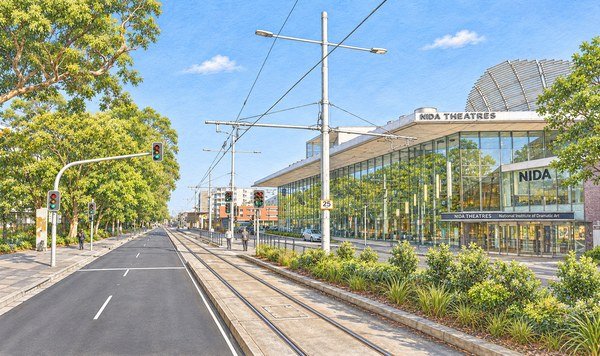
Illustration adapted from a photo by Girzwald, licensed under CC BY 2.0.
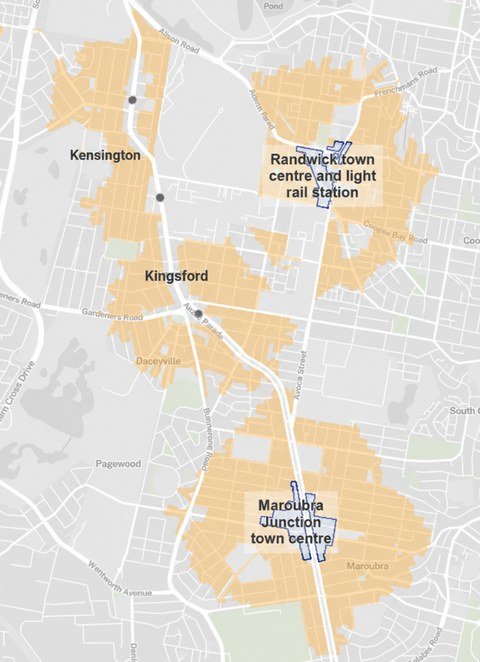
Source: NSW Department of Planning, Housing and Infrastructure, Low and Mid Rise Housing Policy Indicative Map. © State of NSW 2026. CC BY 4.0. Indicative only.
What developers are seeing locally
Kensington benefits from UNSW, light rail and the Anzac Parade commercial corridor. Its planning framework supports significant development on selected sites, while demand can support apartments, student accommodation, co living and mixed use projects.
Kingsford combines a well established Eastern Suburbs location near the Randwick hospital precinct and Coogee Beach with a busy local shopping and dining strip. Around Nine Ways, adjoining shopfronts can potentially be combined to create larger mixed use development sites.
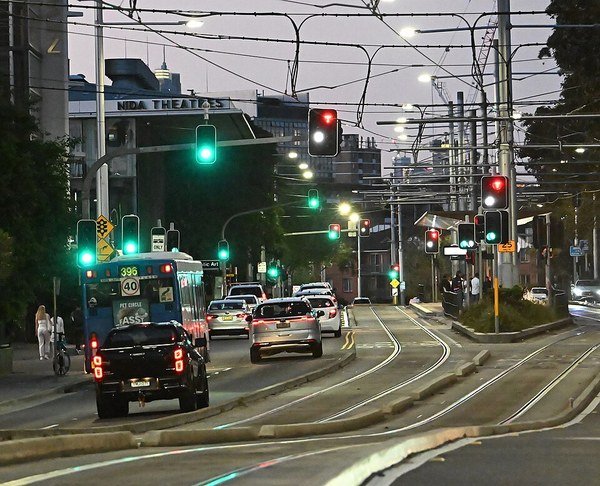
Photo: “Anzac Parade, Kingsford, Sydney” by Sardaka, 21 September 2024. CC0 1.0.
Maroubra presents a different opportunity. Maroubra Junction is a nominated Low and Mid Rise Housing centre, increasing development opportunities on eligible residential properties. Mixed use development is occurring around the Junction, while closer to the coast strong apartment prices support smaller boutique projects.
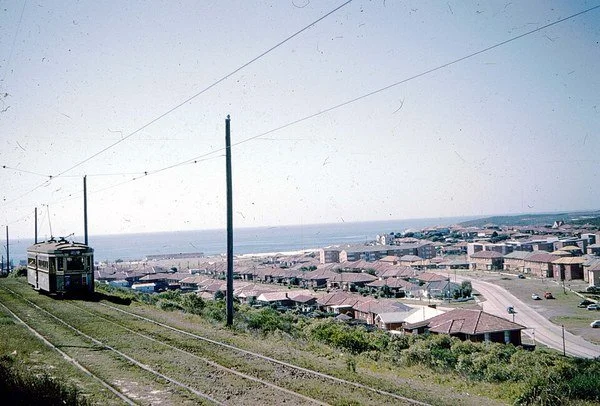
Photo: “Maroubra Bay, last day of trams” by lindsaybridge, 25 February 1961. Licensed under CC BY 2.0.
Augusta Advisors has direct experience advising property owners in the Kensington, Kingsford and Maroubra precinct on these issues, including assessing development capacity and feasibility, the benefits of combining adjoining properties, determining what their properties are worth to developers and the optimum strategy to sell to a developer.
The imbalance of expertise and information
There can be a vast gulf between what a developer knows about a development opportunity and what the property owner knows. Developers assess and acquire sites regularly. They will be thorough in their preparation and will fully understand this:
planning controls and potential planning upside;
development yield and completed property prices;
construction and finance costs;
approval and delivery risks;
the importance of adjoining properties; and
the strategies used to acquire sites on favourable terms.
For many property owners, selling to a developer may be a once in a lifetime transaction.
The developer will understand the future project, its revenue, costs and potential profit before approaching the owner. The owner may simply see an attractive offer for substantially more than the property's existing value not knowing that the developer could pay substantially more.
We regularly see owners enter negotiations without understanding their property's full potential to the developer. The result can be substantial value, sometimes millions of dollars, being captured by the developer rather than the owner without the owner appreciating what has been given away.
How Augusta helps address the imbalance
Augusta acts exclusively for property owners, not developers. Our advice combines development and commercial analysis with the practical knowledge gained from regularly negotiating directly with developers on behalf of owners.
Those negotiations can be commercially tough. Developers are experienced purchasers whose objective is to acquire properties on the most favourable price and terms they can achieve. Our ongoing involvement in these negotiations gives us practical insight into how developers assess opportunities, what influences the prices they will pay and the strategies they use to acquire sites.
We correct the imbalance of expertise and information by giving owners a much clearer understanding of their development opportunity, what their property means financially to developers and the strength of their negotiating position.
Ultimately, our objective is to help owners make as much money as possible from their property by achieving the strongest price and commercial terms available.
What is your property worth to a developer?
This is the most important thing for a property owner to understand before negotiating with a developer. The assessment needs to be made from the developer's perspective, not from the owner's expectations of price or a real estate agent's estimate based largely on comparable property sales.
A developer is buying the opportunity to create a profitable development. Understanding what the property is worth to them therefore starts with establishing:
what could realistically be approved and built;
the revenue the completed development could generate;
development costs, finance, risks and the developer's required return; and
the strategic importance of the property, including whether it enables or improves a larger development.
Together, these factors show what the property means financially to a developer and what the developer should pay for it.
Knowing this before negotiations commence puts the owner in the strongest negotiating position. Instead of negotiating from an asking price, an agent's estimate or the developer's opening offer, the owner can negotiate with an understanding of the developer's own economics and how far the developer may be able to move on price.
Without this knowledge, an owner can negotiate without knowing how much the developer could pay or how important the property is to the development opportunity. It should therefore be understood before discussing price, exclusivity or an option agreement.
Could your property be worth more with your neighbours?
Combining adjoining properties can create substantial additional development potential, particularly where it provides:
greater frontage;
better access;
reduced basement construction cost;
a larger and more efficient building footprint; or
the missing property required to complete a site assembly.
But owners shouldn't assume everybody's property contributes equally. One property might simply add more land. Another may provide the access or frontage that makes a substantially larger development possible.
Understanding what your property contributes to the development before negotiating can materially change your position.
Getting developers to compete for your property
Different developers can place very different values on the same opportunity. One may specialise in mixed use development, co living, serviced apartments or student accommodation. Another may own adjoining land. Others may have lower construction or finance costs, a better design solution or different expectations about future selling prices.
Creating genuine competition allows owners to expose these differences and identify the developers who can place the greatest financial value on their property.
It also allows proposals to be compared on more than price, including deposits, payment timing, due diligence, options, planning conditions, settlement and risk.
The objective is not simply to find a development buyer. It is to identify the developers who place the greatest value on the opportunity and use information, competition and negotiation to achieve the strongest financial result for the owner.
Frequently Asked Questions
-
Yes. Development potential varies significantly across all three suburbs and can be affected by zoning, height and floor space controls, the Kensington and Kingsford planning framework, the Low and Mid Rise Housing Policy, site frontage, access and adjoining properties. The important issue is what the controls mean for the individual property and the development opportunity it could create.
-
Planning changes can increase the type or amount of development possible on a property, which can significantly change its attractiveness to developers. However, increased planning capacity does not automatically translate into the same increase in price. The financial impact needs to be assessed through the development that could realistically be delivered, its likely revenue and costs, and what the resulting opportunity means to prospective developers.
-
It depends on what can be developed, the revenue that development could generate, development costs and risks, and the property’s strategic importance. Understanding these factors provides the commercial basis for assessing what the opportunity is worth to different developers.
-
Yes. A property may provide critical frontage, access or site configuration. Its importance to a development can therefore be considerably greater than its land area alone suggests.
-
Understand the development potential and what your property is worth to the developer before negotiating price or commercial terms. The developer is likely to have undertaken this analysis before approaching you.
-
Not necessarily. It is generally better to understand what your property can achieve independently and what additional financial benefit amalgamation could create before commencing discussions.