
Recent planning changes have created significant development opportunities for some property owners in Gordon, Lindfield, Killara and Roseville. For these owners, the key question is not simply what can be built on their property but how that potential can be turned into the strongest possible financial result.

Achieving that means understanding what development could realistically be approved and built, what the completed project could be worth, what the developer could afford to pay for the land and how best to take the property to market. This may mean selling a substantial property individually, combining adjoining properties or selling a strata building collectively to create a more valuable development opportunity.
Developers typically have substantially more development knowledge and transaction experience than landowners. Their objective is naturally to acquire sites on the most favourable commercial terms available. Owners therefore need to understand the development potential of their property, how valuable and attractive that opportunity may be to developers and what a developer could pay. This requires understanding:
What could realistically be developed, such as apartments or retail space.
How much floor space could realistically be approved and constructed.
The likely market demand and revenue from the completed development.
What a typical developer could afford to pay for the property.
This information gives the owner a stronger commercial understanding of the property and a sound basis for assessing offers and negotiating the price and terms.
Understand how a development site is assessed
Selling a potential development site requires a different approach from selling a property for its existing use. Beginning discussions with developers or neighbours before fully understanding the opportunity can weaken your negotiating position or lead to discussions based on incorrect assumptions.
Developers are in the business of creating floor space to sell profitably and they assess what can realistically be built on a site, the revenue it could generate, delivery costs, risks and their required profit to determine what they can afford to pay for the land.
Height limits are only one guide to a property's development potential. Achievable saleable floor space depends on many variables, including setbacks, access, parking, site shape, design requirements and other planning constraints. Two properties with the same height limit can therefore attract quite different offers.
The price a developer may be prepared to pay is driven by very different considerations from those affecting a property's existing use. For example, a renovated house may command a premium from a homeowner but add little to a developer's assessment if it will ultimately be demolished. Planning certainty, timing, competition and transaction terms are also important influences on the price achievable.
For the property owner, the purpose of understanding development potential is ultimately financial, that is, to understand what the opportunity could be worth to prospective developers and how much of that potential can be captured through the price and terms achieved.
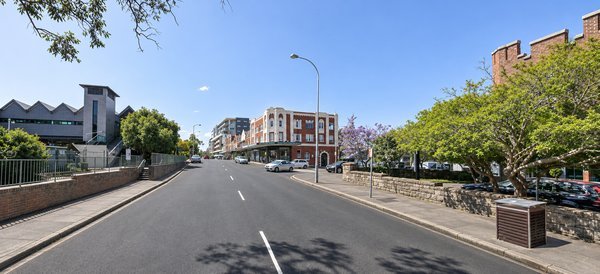
Assess whether neighbours add value
Some properties can support development on their own, while others become more valuable when combined with adjoining land. A combined site may allow a more efficient design, greater floor space, better access and servicing, or additional uses.
However, amalgamation does not automatically improve an owner's financial outcome. The key question is whether including a property creates sufficient additional economic benefit for the combined development to support a better result for you than proceeding independently. That benefit may come from additional floor space, but it may also arise because the additional property provides essential frontage, access, site configuration or design flexibility.
If a combined sale is worthwhile, the neighbours involved must also be aligned. Developers will be hesitant to commit resources if the group isn't aligned or appears unlikely to complete a transaction.
Commercial property owners should also weigh rental income, lease terms and holding costs, particularly land tax, along with the tax implications of a sale for them or their entity, when assessing development options and timing.
Evaluate developer approaches carefully
An unsolicited approach can create pressure to act before you fully understand the opportunity creating a risk that the developer captures a disproportionate share of its financial benefit. An attractive headline price may become significantly less attractive once conditions, payment timing and the risk of the transaction not proceeding are fully understood.
The objective is to maximise your financial outcome, taking account of transaction costs, payment timing, conditions and the risk of the transaction not proceeding.
Unless there is a clear reason to take a different approach, our advice is to engage developers through a structured competitive process with an experienced adviser representing the owners' commercial interests.
Competition is important because different developers may assess the same site differently. They may have different construction costs, funding arrangements, adjoining holdings, design solutions or views about achievable sales prices. A structured competitive process allows owners to test those differences and negotiate from a stronger position rather than relying on a single developer's assessment.
How development potential translates into a financial outcome
Establish what can realistically be built. Start with the planning controls, including any proposed rezoning or masterplan, then test the type and amount of floor space the site could realistically accommodate. This requires considering setbacks, solar access, cross ventilation, parking, access, site shape and design requirements.
Understand the project's economics. Use relevant market evidence to estimate the completed project's revenue, then deduct construction, GST, selling costs, legal and professional fees, statutory charges, finance costs and the developer's required return. The residual amount provides an indication of what the developer could afford to pay for the land.
Determine the right strategy. Consider whether the property should be sold independently or with neighbours, whether further planning work could improve the opportunity and how competition between developers can be created. The aim is to convert the property's development potential into the strongest achievable price and transaction terms.
The imbalance of expertise and information
There is often a vast gulf between developer's development expertise, market information and negotiating experience and that of property owners. Developers acquire and assess sites continuously while property owners may only negotiate the sale of a development opportunity once. In our experience, property owners often don't recognise how significant this imbalance is or how strongly it can affect the price and terms the property owner achieves.
A developer will consider much more than the current planning controls. They will assess whether there are ways to get valuable additional floor space approved, what the completed floor space could sell for, construction and finance costs and planning and delivery risks. They also often have access to transaction and market information that is not readily available to the owner.
The key for the property owner is knowing what the property is worth to the developer and the strategies developers use to acquire properties at less than that full value. An owner who begins negotiating without understanding that risks giving away value to the developer.
The objective is simple, use better information, strategy and competition to achieve the strongest financial outcome for the property owner.
When we advise our clients, we help close the gap in expertise and information by combining our assessment of the development opportunity with practical knowledge gained from negotiating directly with developers on current transactions.
Frequently Asked Questions
-
Yes, although developers are selective. Recent planning changes have created new opportunities across the four centres, but whether a particular property attracts interest depends on its location, realistic development capacity, site configuration, planning risk and acquisition price.
-
Potentially. Combining adjoining properties can create a larger and more efficient development site, improve access or design, or allow additional floor space. However, amalgamation does not automatically improve what each owner receives. The relevant question is whether the combined site creates enough additional development or commercial benefit to improve your financial outcome compared with proceeding independently.
-
They may have. Recent planning changes have materially increased development potential across parts of Gordon, Lindfield, Killara and Roseville. For some owners, those changes may have significantly altered what their property could accommodate and what a developer may be prepared to pay for it.
-
Start by assessing the development that could realistically be delivered on the site and the revenue it could generate. Construction costs, finance, professional fees, statutory charges, taxes and the developer’s required return are then deducted. The residual amount provides an indication of what a developer could afford to pay for the land and gives the owner a much stronger basis for assessing offers and negotiating price.
-
Not necessarily. Before approaching either neighbours or developers, it is usually better to understand what your property can achieve independently and whether combining it with adjoining land would improve your financial outcome. This avoids revealing your position or entering negotiations before you understand the strategic importance of your property to a larger development opportunity.